
Reliance Industries (RIL) has reset its battery pack production timeline, shifting it from 2023 earlier to 2024, details shared in the oil-to-telecom conglomerate's latest annual report suggest. In the FY23 annual report released on Sunday, the company has listed the start of battery pack production in 2024. A year ago, at the company's annual general meeting (AGM), Mukesh Ambani, chairman and managing director of RIL, had said, "We aim to start production of battery packs by 2023 and scale up to a fully integrated 5 GWh annual cell-to-pack manufacturing facility by 2024."

Reliance Industries (RIL's) annual report released on Sunday highlighted the company's focus on new energy solutions, with chairman and managing director (MD) Mukesh Ambani stating that the age of fossil fuels will not continue much longer. RIL has sought shareholders' approval to give Ambani another five-year term as MD till 2029 at nil salary. The recently demerged Jio Financial Services, which "will leverage the prowess of digital and retail businesses", was expected to be listed soon.
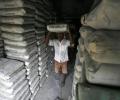
Cement manufacturers' show during the June 2023-ended quarter (Q1FY24) has indicated an intensified slugfest for market share. For instance, Dalmia Bharat (Cement) said it has lost market share in eastern India owing to lack of price discipline. Industry analysts also said that the seasonal weakness in cement prices for Q1 is showing up earlier than usual.
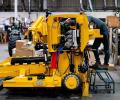
Capital goods companies are likely to report double-digit growth in sales and profit for the first quarter of the 2023-24 financial year (Q1FY24), according to analysts. The performance will ride on lower raw-material costs and healthy execution of orders. Sales by capital goods companies are likely to increase 13-20 per cent year-on-year (YoY), five domestic brokerage firms said.

Billionaire Gautam Adani on Wednesday shared a personal note on the development of Dharavi in Mumbai, days after the Maharashtra government issued a resolution to award the Dharavi redevelopment project to his conglomerate on July 14. In the note shared with the media, Adani said his first tryst with Dharavi in Mumbai was in the late 1970s, and the slum settlement continues to amaze and inspire the billionaire to date. "When this opportunity to renew Dharavi came calling, I seized it with both hands," he said.

Even as regulatory focus has zeroed in on foreign e-commerce giant Amazon, a domestic retail giant has been created almost below the radar in Reliance Retail (RR), one of the most crucial businesses for the group's future. From doorstep delivery of groceries, apparels to branded jewellery, medicines, toys, furniture to high street retailing, RR's presence in the world's fourth largest consumer market is just one part of the story.
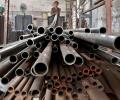
Rising prices of international coal - both coking and thermal - used in the making of ferrous and non-ferrous metals, respectively, are expected to have an impact on margins of metals companies in July-September quarter (Q2) as steel companies may see margins getting eroded, while the base firms could stand to benefit, said brokerages.
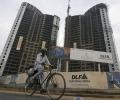
In mid-2020, when Kushal Pal Singh, the undisputed king of India's vast real estate market, relinquished the top post at the country's largest realtor, he left behind an empire that is best compared to the Greek myth of the Phoenix. Once the leader of Delhi's organised real estate market, DLF's steep decline in the 1970s and its majestic rise since has often been cited as a business resurrection story. Now, a year after his departure from the helm of affairs, history seems to be repeating itself at the real estate major. In the 1970s, it was the government prohibitions that had forced DLF to venture into uncharted territory; some five decades later, the Delhi-headquartered firm has set its eyes on another growth trajectory that holds immense potential.

'We will see footfall returning to pre-COVID levels by January.'

After the hit of the pandemic, India Inc is now worried about the adverse impact of inflation and higher commodity prices on their revenues and margins. The inflation scare is the strongest among manufacturers of consumer goods such as automobiles, consumer durables, and fast-moving capital goods (FMCG). Companies across sectors fear they will not be able to pass on the hike in input costs to their consumers due to weak demand, which, in turn, would lead to a hit on margins and profitability in the forthcoming quarters.

With a robust outlook for mineral-led growth in India, Anil Agarwal-led Vedanta Limited is looking to invest up to $20 billion across its businesses, which includes doubling of silver production and steel capacities. In a virtual press conference had last month, Agarwal said the company planned a capex of $5 billion over a period of three years. The company has not given a timeline for $20-billion investment.

In spite of a severe second wave of the coronavirus pandemic, and a widespread disruption in public life therefore, India's fast-moving consumer goods (FMGC) sector seems to have emerged as one of the most resilient segments of the economy. The early numbers and estimates for the April-June quarter indicate a steady recovery in FMCG players' business, which is now set to exceed the pre-pandemic level. Amid nationwide lockdowns because of the first Covid wave, FMCG revenues had been severely affected in mid-2020.

'The spurt in demand for Ayurvedic products has exhausted our production capacity.'

Higher prices are burdening household budgets and threatening the margins of leading manufacturers.

According to the local Brass Handicrafts Manufacturers Association (BHMA), some 800,000 people are directly employed in Moradabad's massive brass handicrafts and utensils manufacturing industry, which has some 30,000 small and micro-scale units and a total annual turnover of Rs 10,000 crore. The manufacturers are heavily dependent on export markets such as the US, Canada, Australia and the European Union. And exports account for nearly 70 per cent of their revenues. According to industry insiders, since this year's lockdowns, manufacturing has been at 65 per cent of normal levels.

The probe agency is learnt to have taken possession of multiple physical and digital records during a search operation conducted on the premises of the South Korean firm in Delhi and Mumbai this week.

With the threat of a third Covid-19 wave looming large, companies are scrambling to protect employees and keep operations safe--from a no-jab-no-entry-at-workplace policy to ramping up vaccination, it's an all-out effort to prevent the scale of devastation seen in the first two waves. At least two top steel companies--Tata Steel and ArcelorMittal Nippon Steel India (AM/NS India)--are pushing for vaccination certificates for entry into work premises. AM/NS India, a joint venture between world's leading steelmaker, ArcelorMittal, and Japan's Nippon Steel, is set to make vaccination the certificate a requirement from July 1.

Sanjiv Mehta, chairman of the country's largest consumer goods company, HUL, believes that the second wave of the Covid-19 pandemic between April and June this year has been a mere pause in India's consumption story, and that it will not change the country's overall growth trajectory. India is poised for growth, especially in the fast-moving consumer goods (FMCG) sector, Mehta told shareholders at the company's annual general meeting on Tuesday. The signs of recovery are becoming evident with many states lifting lockdown restrictions in recent weeks.

With the increased death rate in the ongoing second wave of Covid-19, domestic cement companies are in no better condition than they were in the April-June quarter of FY21 when the country faced nationwide lockdown. "This wave has had high death rate which has impacted the business. "We are in no better situation than last (year) April. "Deaths of drivers, dealers, contractors and also employees have hit the industry really very hard since April (FY22)," M Ravinder Reddy, director of Bharathi Cements said.

Rising prevalence of work-from-home and e-learning is driving sales of notebooks and tablets for most brands, but Apple's superior performance has more to do with its product quality.
 © 2026 Rediff.com - Advertise with us - Disclaimer - Privacy Policy - Sitemap - Feedback - About us - Terms of use - Grievances